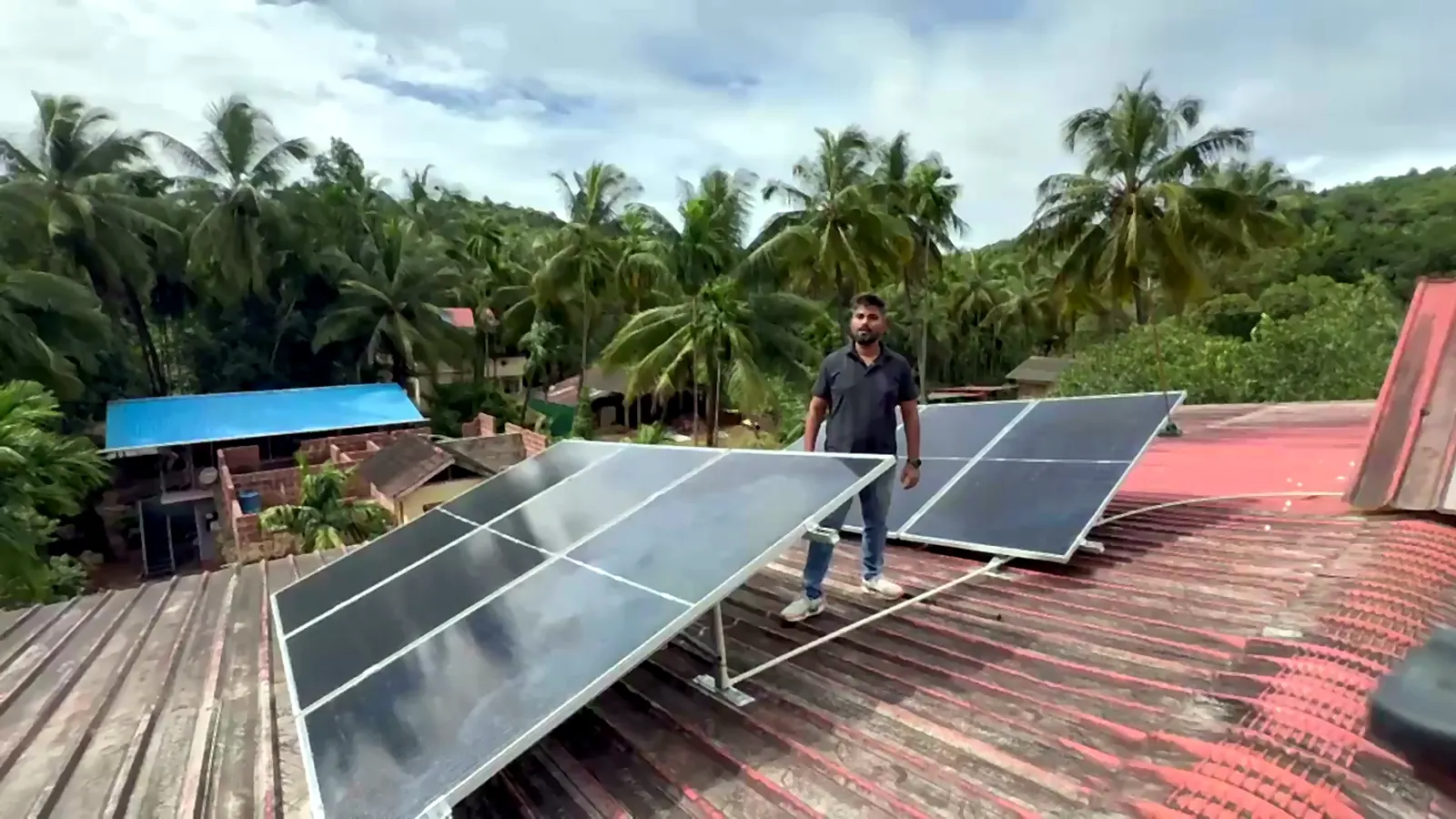
- On-grid: lowest cost, best payback — but it switches off during a power cut.
- Hybrid: adds a battery and a hybrid inverter, so essential loads keep running during outages.
- Off-grid: no grid connection at all — mainly for remote sites without reliable supply.
- The PM Surya Ghar subsidy is based on your solar panel capacity; the battery itself is not subsidised.
“Which solar system should I buy?” is the first question almost every homeowner asks us. The honest answer depends on two things: how often your power goes out, and what you need running when it does.
On-grid solar: the most affordable way to cut your bill
An on-grid system has panels, an on-grid inverter and a net meter — no batteries. Solar power runs your home during the day, surplus goes to the grid, and you draw from the grid at night.
- Pros: lowest upfront cost, fastest payback, very little maintenance, eligible for the PM Surya Ghar subsidy.
- The catch: during a power cut, an on-grid inverter shuts down automatically. This is a safety requirement (called anti-islanding) so that linemen working on the grid aren’t put at risk — even if the sun is shining.
Hybrid solar: savings plus backup
A hybrid system adds a hybrid inverter and a battery bank. It still uses net metering, but it can also store energy and power your essential loads when the grid fails.
- Pros: backup during outages, more of your solar is used at home in the evening, and protection for work-from-home setups, medical equipment, pumps and refrigeration.
- The catch: higher upfront cost, and batteries have a shorter life than panels, so plan for a replacement during the system’s lifetime.
Off-grid solar: for sites without reliable supply
An off-grid system runs entirely on panels and batteries with no grid connection. It suits farms, remote homes and sites where grid supply is unavailable or extremely unreliable. It isn’t eligible for the grid-connected rooftop subsidy.
Side-by-side comparison
| On-grid | Hybrid | Off-grid | |
|---|---|---|---|
| Battery | No | Yes | Yes |
| Works in a power cut | No | Yes (backed-up loads) | Yes |
| Net metering | Yes | Yes | No |
| Upfront cost | Lowest | Higher | Highest for the same load |
| Payback | Fastest | Moderate | Depends on what it replaces |
| Best for | Reliable grid, bill savings | Frequent outages, evening use | No or very poor grid |
How to decide
Choose on-grid if…
- Power cuts in your area are rare or short.
- Your main goal is the lowest possible electricity bill and quickest payback.
- You already have an inverter-battery for basic backup.
Choose hybrid if…
- You face regular outages, especially in the monsoon.
- You work from home or run equipment that can’t switch off — medical devices, fridges, pumps, CCTV.
- You use most of your electricity in the evening.
Getting the size right (especially with ACs)
Air conditioners, pumps and motors draw a surge of current when they start — several times their running load. A hybrid inverter and battery must be sized for these surges, not just your average consumption, or the system will trip. This is exactly where a careful load analysis pays off.
Want even more independence?
For homes with good wind exposure, a hybrid inverter can also take input from a small vertical-axis wind turbine — adding generation in the evenings and during the monsoon. See solar + wind hybrid systems for homes.
Frequently asked questions
Why does my on-grid solar stop working during a power cut?
On-grid inverters are required to shut down when the grid fails (anti-islanding), so they don’t send power into lines that maintenance staff may be working on.
Can I add a battery to my existing on-grid system later?
Often yes — either by replacing the inverter with a hybrid inverter or by adding a battery system designed to work alongside it. It depends on your current equipment.
How long do solar batteries last?
It depends on the battery chemistry and how deeply it is cycled. Lithium batteries generally last much longer than older lead-acid batteries, but most will need replacing at least once over a solar system’s life.
Is hybrid solar eligible for the PM Surya Ghar subsidy?
The subsidy is for grid-connected rooftop solar and is based on panel capacity. A grid-connected hybrid system can qualify on its solar capacity; the battery is not subsidised.
Not sure what’s right for your roof?
Book a free site visit. We’ll study your roof, your bills and your backup needs — and recommend the system that actually fits, including the subsidy paperwork.